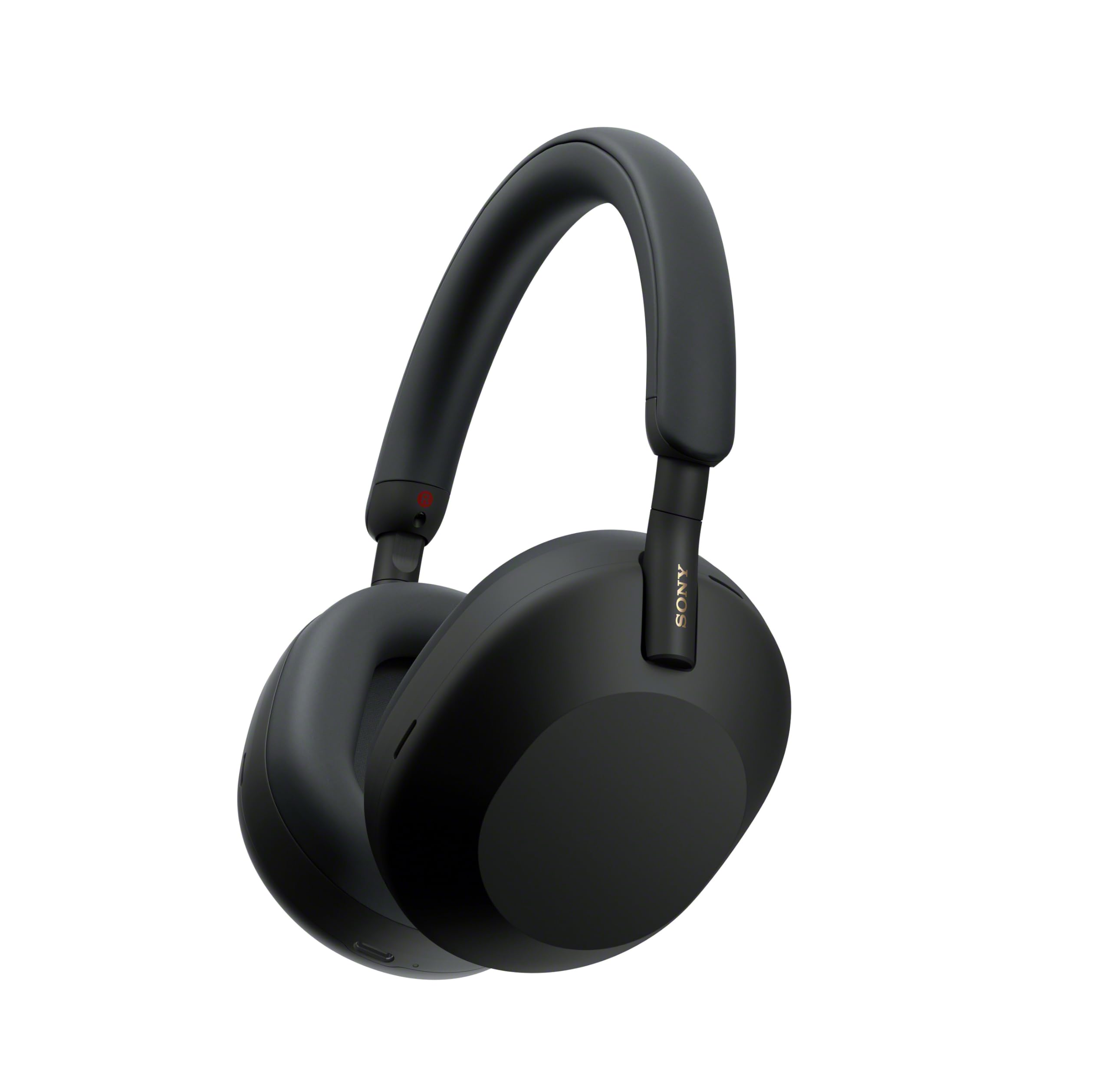
The Sony WH-1000XM5 remains the default recommendation for travelers and commuters: outstanding noise cancelling, a 30-hour battery, and 250-gram comfort that owners praise for all-day wear. It doesn't fold and the stock tuning runs bass-heavy, but at typical street prices under $300, it's the value king of flagship ANC headphones.
— THE VERDICT · JUDGEANY EDITORSWhy the XM5 still matters in 2026
Sony launched the WH-1000XM6 in May 2025, and that turned out to be great news for the XM5's price tag. The older flagship now routinely sells for $250 to $300 — down from its $399.99 list price — while keeping the noise cancelling, battery life, and comfort that made it famous. This review pulls together manufacturer specs, thousands of owner reviews, and published expert measurements. We don't run a test lab; the scores below are editorial judgments built on that evidence.
Noise cancelling: the headline act
The XM5's noise cancelling runs on two Sony chips (the Integrated Processor V1 and the HD QN1) driving eight microphones, and owners praise it more than anything else about these headphones. On planes and commutes, where low-frequency rumble is the problem, they call it transformative. Published measurements agree: SoundGuys' lab testing measured roughly 84% ambient noise reduction, and RTINGS rated the ANC 8.8 out of 10 — excellent overall, though not quite as strong as Bose's best in the deep bass.
Comfort and battery: built for long hauls
At 250 grams with light clamping force, the XM5 is one of the most comfortable flagships for multi-hour wear — owners single this out for flights and full workdays. Sony rates battery life at 30 hours with ANC on (40 with it off); independent continuous-playback testing landed around 27 hours, which still means a full week of commuting per charge. A 3-minute quick charge adds roughly 3 hours of playback.
Sound: great after five minutes in the app
Out of the box the tuning is warm and bass-forward — independent measurements show a bass shelf of roughly 5 to 8 dB with slightly recessed upper mids, so vocals can sound distant. The fix works: the Sony Sound Connect app's custom EQ is widely used by owners to dial this in, and they report liking the results. Android users get LDAC hi-res wireless; iPhone owners are limited to AAC, with no aptX support.
The complaints are real, too
The number one owner gripe is that the XM5 doesn't fold — the earcups only swivel flat, so the case is bulkier than the XM4's. The plastic build draws "feels cheap for the money" comments, and hinge/headband breakage is the most serious recurring thread: a SoundGuys reader poll (self-selected, 2,000+ respondents) found 24% reporting a hinge or headband break, and 2026 BBB complaints show Sony sometimes classifying breaks as out-of-warranty physical damage. Treat that poll as a signal of owner concern, not a population failure rate — but handle the headband with care.
XM5 vs XM4: the value question
The "just buy the XM4 on sale" argument is persistent and not wrong. The XM4 folds, sounds close, and is often much cheaper. The XM5 wins on better noise cancelling, lighter long-session comfort, and clearly improved call quality from its 4 beamforming mics with AI noise reduction. If the price gap is small, get the XM5; if the XM4 is dramatically cheaper, it's the smarter buy.
Who should buy it
Travelers and commuters who want top-tier ANC, week-long battery, and light comfort should buy it on sale — never at the $399.99 list price. At $250 to $300, the XM5 is the value king of flagship noise-cancelling headphones.