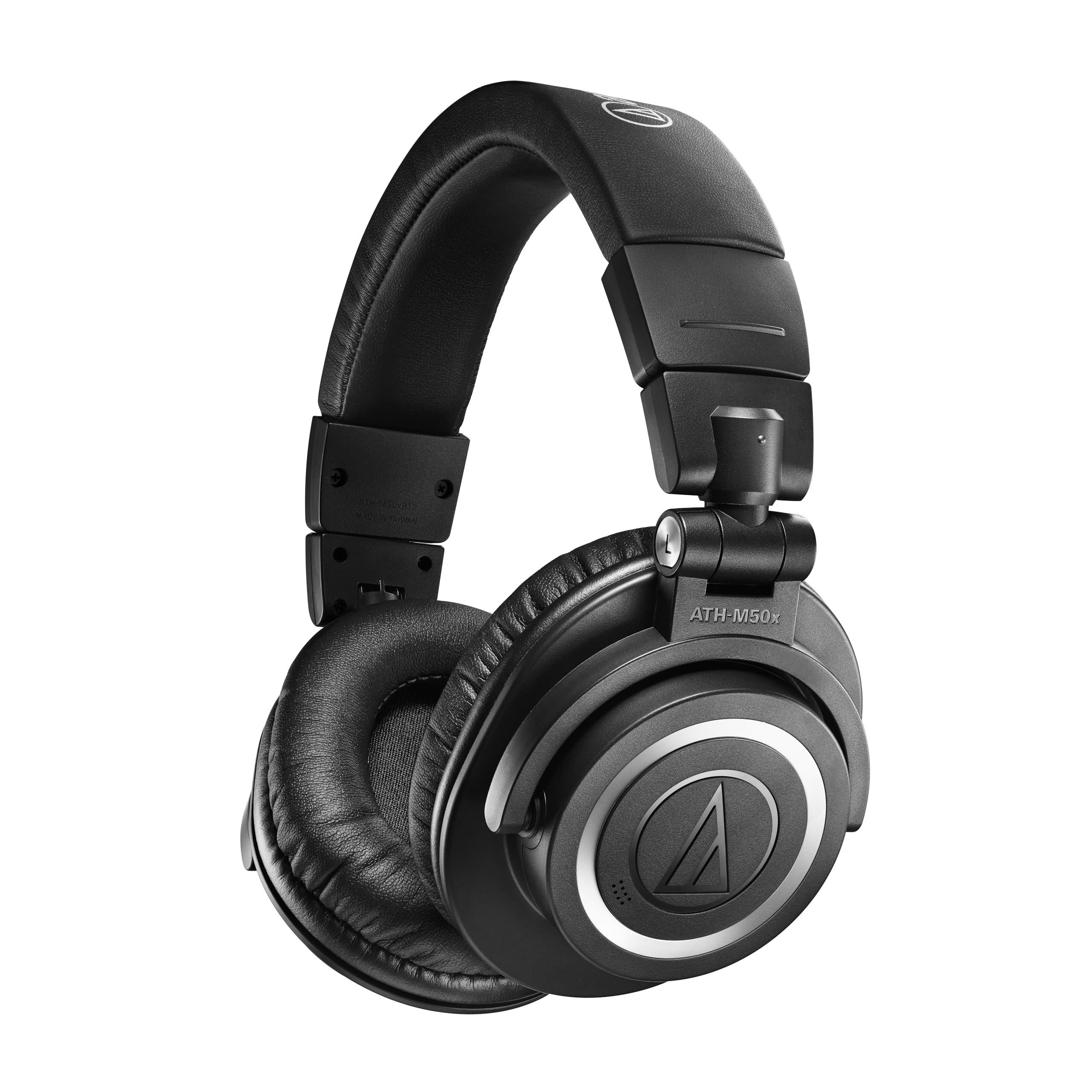
The ATH-M50xBT2 is the wireless M50x done right: same studio tuning, LDAC, multipoint, an app with real EQ, and battery life SoundGuys measured at nearly 65 hours. The clamp is tight, there's no ANC, and aptX is gone — but nothing else gives you this sound, this battery, and a wired fallback at this price.
— THE VERDICT · JUDGEANY EDITORSThe ATH-M50x is the headphone everyone has borrowed at some point — the closed-back studio monitor that became the default recommendation for a decade. The ATH-M50xBT2 is its second-generation Bluetooth version, released in 2021: the same 45 mm drivers and the same M50x tuning, now with LDAC, multipoint pairing, and a 50-hour battery claim that SoundGuys' testing beat by nearly 15 hours. It sounds like an M50x — that's settled. The buying question is whether the wireless extras are worth choosing over the cheaper wired original.
Sound quality
The tuning follows the M50x playbook: a slight lift in the bass and treble around a clear midrange, the kind of sound that lets you hear what a mix is doing. StereoNET's review found the wireless LDAC connection nearly indistinguishable from the wired M50x, and noted that with the in-app EQ you can reshape the signature to taste. SoundGuys, measuring the headphone against its studio curve, called the sound excellent and straightforward, with some under-emphasized deviation in the midrange and treble — honest, not perfect. The caveat is shared across reviewers: the top end can run bright. Audio46's listening notes call the midrange slightly subdued beneath a bright high end. If you're sensitive to treble, the app's EQ is not optional — it's the fix.
Battery and charging
Audio-Technica claims roughly 50 hours of continuous use, and this is one of those rare spec-sheet numbers that independent testing outperformed: SoundGuys measured just under 65 hours — 64 hours and 51 minutes on their rig. A 10-minute rapid charge over USB-C returns up to 3 hours of playback, per Audio-Technica, and a full charge takes about 3.5 hours. For anyone who has owned the first-generation M50xBT, the jump matters twice: 50 hours claimed versus 40, and USB-C replacing the old micro-USB port. Battery life is not a buying consideration here — charge it roughly once a week and move on.
Codecs, multipoint, and the aptX question
The BT2 supports LDAC, AAC, and SBC over Bluetooth 5.0 — and notably drops aptX, which the first-generation M50xBT had. RTINGS' comparison of the two generations flags exactly this: the BT2 gains longer battery, EQ, multipoint, and a better microphone, but gives up aptX, and some listeners may prefer the older model's bass-richer sound. For Android users with LDAC-capable phones, the trade is a clear upgrade — LDAC's 990 kbps ceiling beats aptX. For everyone else, especially Windows users stuck on SBC, it's a sideways move at best. Multipoint pairs two devices at once, Google Fast Pair speeds up Android pairing, and a low-latency mode in the A-T Connect app keeps video and games in sync. The AK4331 DAC and dedicated headphone amplifier inside are the reason the wireless signal holds together instead of sounding thin.
Comfort and design
This is the M50x chassis, which means the M50x fit: firm clamping force, folding earcups, 90° swiveling cups for single-ear monitoring, and 307 g of weight. StereoNET suggests hanging them over some books for a few days to loosen the grip — the tight fit is deliberate, it's what makes the passive isolation work. But comfort is where the record splits. SoundGuys mentions a tight fit and heat buildup from the leatherette pads, and Laptop Mag's review found them uncomfortable after about an hour. Adorama's buyer aggregate sits at 4.4/5 across 149 reviews — mostly positive, with the clamp being the recurring complaint. Glasses wearers and small heads should try before committing; everyone else gets a headphone that stays planted.
Calls, app, and everyday use
Dual beamforming microphones with sidetone — you hear your own voice on calls — plus a hardware mute button put call quality a clear step above the first generation. SoundGuys found the microphone reproduced voices accurately and rejected most background noise. The A-T Connect app earns its place: a 5-band EQ that saves to the headphones themselves, codec selection, L/R balance, low-latency toggle, voice-assistant choice (Alexa built in, plus Google Assistant and Siri), and a find-my-headphones locator. There's no auto-pause on earcup lift, no touch controls — tactile buttons only — and the box holds a soft pouch rather than a hard case. Small omissions, but real ones at this price.
Verdict in context
The record argues with itself, which is worth stating plainly. Amazon's buyer aggregate sits at 4.0/5 across 3,540 ratings — lower than the professional praise would suggest — with the clamp force, the missing ANC, and the lack of auto-pause doing most of the damage. RTINGS notes the gen-1 loyalists have a point: the old model was bass-richer and had aptX. SlashGear's review landed at the flat-sound caveat — "not for everyone" — and asked for ANC at this price. And yet the conclusion holds for the right buyer. No rival pairs the M50x tuning with LDAC, multipoint, a 65-hour measured battery, and a wired fallback cable in the box — and none of the ANC flagships will tell you the truth about a mix. Buy it for studio-style listening, calls, and long sessions; buy a Sony or Bose if the plane cabin is your main venue. Check the current price on Amazon before deciding.